
Solutions for Realigning Off-Track Garage Doors
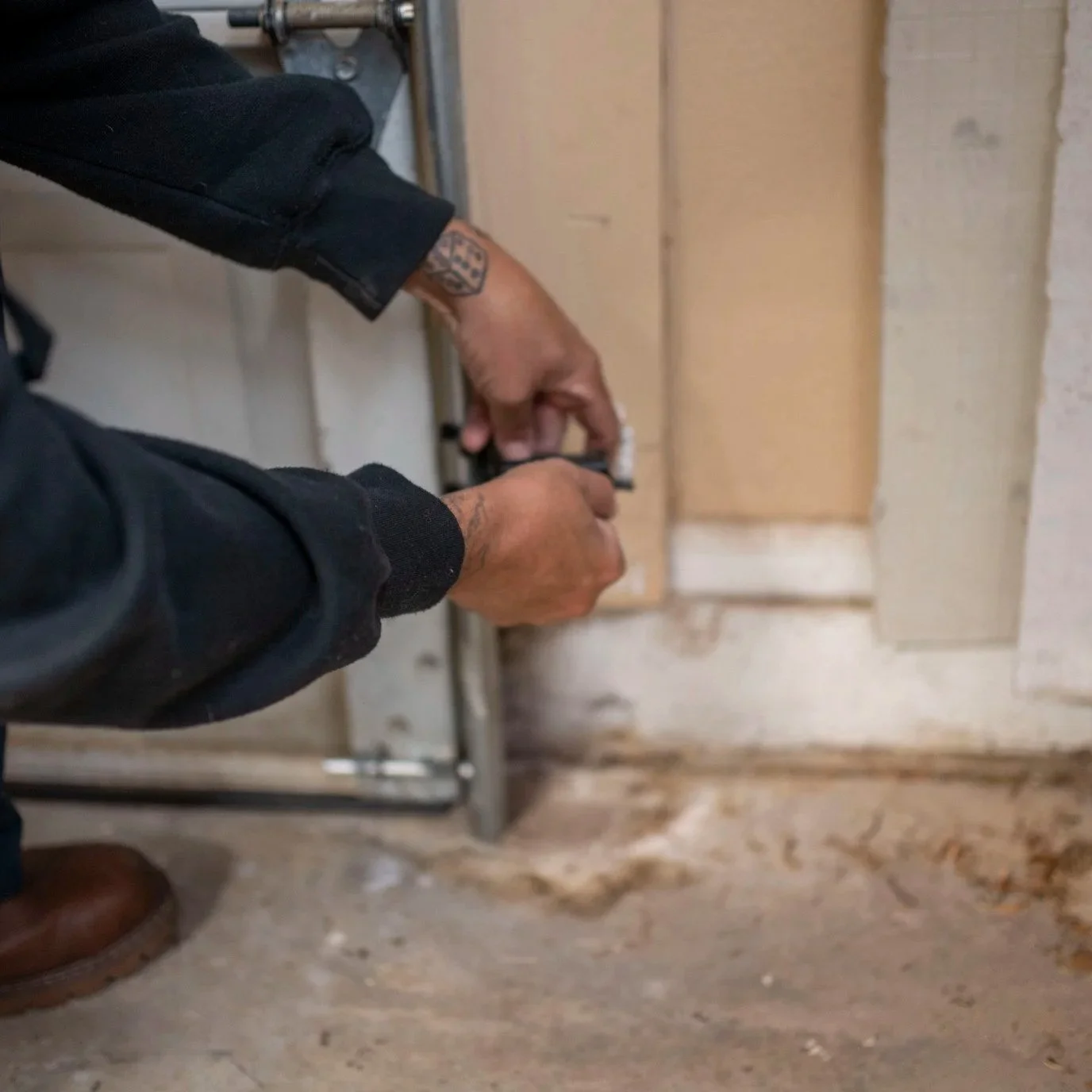
Each off-track garage door comes with its own backstory, and uncovering that narrative helps guide the most effective repair strategy.
Identifying What Went Sideways
Garage doors are massive, weighty things that glide along their tracks as though they're performing a graceful little ballet. But when a roller slips out of alignment or a cable slacks, that dance turns into a clunky, screeching disaster. Suddenly, the door leans, groans, and refuses to budge like a grumpy teenager on a Monday morning.
Understanding the cause of the derailment is the first step for professionals. It might be a track bent from an accidental bump with a vehicle bumper. Or a frayed cable decided it had had enough. Sometimes, even dirt and debris can build up enough to throw the rollers off. Each off-track garage door comes with its own backstory, and uncovering that narrative helps guide the most effective repair strategy.
Diagnosing Damage Without Guesswork
Not every off-track door shows damage that's immediately visible. A casual glance might only reveal a tilted panel or a jammed roller. But underneath that outward quirk may be bent track sections, loose mounting brackets, or a spring that's quietly plotting its escape.
Technicians inspect the door's full operating system to rule out bigger issues. They check cable tension, track integrity, and roller wear. No guesswork involved—just methodical problem-solving with a trained eye and a healthy respect for the sheer weight of the door hanging inches above the garage floor.
Preventing Panic Through Controlled Movement
When an off-track garage door acts up, most homeowners instinctively want to force it shut or yank it back into position. Understandable, but also a recipe for disaster. A door that's hanging crooked is already unstable. Forcing it can make it worse—panels may buckle, rollers can snap off entirely, and cables might suddenly unravel.
Professionals use stabilizing equipment and step-by-step processes to avoid turning a tricky situation into a full-blown collapse. They brace the door, secure the rollers, and control movement using tools specifically designed for heavy mechanical systems. No drama. No wrestling matches. Just measured, skilled handling of a door in distress.
Repositioning Rollers With Precision
One of the most common issues with off-track doors involves rollers that have popped out. Whether the track was bent or the roller simply wore down and jumped ship, putting things back in place isn't as simple as just lifting and pushing.
Professionals use alignment tools and guides to reseat the rollers without straining the system. They often remove the roller from its hinge bracket, replace it if it's worn, and reinsert it into a properly realigned track. Once it's set, they test the roller's movement along the full length of the track—no skipping, no binding, just a smooth roll like it was always meant to be.
Correcting Bent or Misaligned Tracks
Tracks don't like being bent. Even a small ding can make a roller hesitate, catch, or slip. A track that's been hit hard—by a car, ladder, or wild game of driveway basketball—can become distorted enough to halt the door in its tracks, literally.
Technicians use leveling tools and straightening bars to correct minor warps. If a section is too far gone, they remove and replace the entire piece of track. That job involves realigning not just the vertical track, but also the curved transition and horizontal rails, all while balancing the door so it doesn't shift out of position mid-repair.
Tensioning Cables With a Healthy Dose of Respect
Cables carry much of the garage door's tension load. When one snaps or unwinds, the entire system can become lopsided in a hurry. The door may rise unevenly, jerk from side to side, or hang tilted off the tracks like it's trying to escape.
Working with these cables requires precision and more than a little respect. Garage door professionals rethread cables through the drums, check for wear, and use specialized winding tools to apply balanced tension. A cable wound too tightly could overcompensate and pull the door off the opposite track. One left too loose may not support the door's weight. Finding that balance point is key, and it takes real-world experience and a whole lot of patience.
Tightening Loose Hardware Before It Wanders Off
The sound of a bolt rolling across the garage floor is never comforting. A single loose bolt on a hinge or track bracket can shift the entire weight balance of a garage door. Enough vibration, and the track moves just enough to encourage a roller to explore new territory outside the rails.
During realignment, professionals inspect every bracket, hinge, and fastener to ensure each is securely fastened. If a screw is stripped or a bracket is cracked, it gets replaced immediately. That kind of meticulous work keeps future derailments at bay and helps the door stay right where it's meant to be—on its track, behaving itself.
Checking Door Balance and Movement
Even when everything looks straight, there's no substitute for a complete balance test. A garage door that's perfectly aligned should move smoothly, stop halfway without slamming down, and require very little force to lift manually. If it jerks or drops, something's still off.
Professionals test the door manually and with the opener, adjusting springs and fine-tuning settings as they go. They look for smooth transitions, consistent speed, and a complete lack of weird noises—clicks, pops, and clunks are red flags. The final result is a door that feels light in motion, regardless of its weight.
Making Safety Features Work Like They're Supposed To
Auto-reverse systems, photo-eye sensors, and force adjustment settings all come into play when a garage door goes off-track. After all, if the door couldn't detect an obstruction in time to stop, the whole system may need a fresh calibration.
Realignment isn't complete until every safety feature has been tested. Sensors are cleaned and realigned, force limits are dialed in, and open-close cycles are tested repeatedly. That extra step doesn't just restore function—it brings peace of mind knowing the door will stop if a stray tricycle rolls under it or a pet darts through at the wrong time.
Lubricating for Longevity
Once everything's aligned and reassembled, it's time to grease the wheels—literally. Dry rollers, stiff hinges, and rusty springs make a door louder and more stubborn. That extra friction can even lead to another derailment over time.
Technicians apply high-quality, weather-resistant lubricant to moving parts across the system. Rollers glide more easily. Hinges pivot without squeaking. Springs compress and expand like they were designed to. It's like a spa day for your garage door—leaving it refreshed, cooperative, and far less likely to rebel.
Giving the Door a Clean Bill of Health
Before wrapping up, professionals complete one final inspection—an all-systems-go check from top to bottom. They examine cable windings, roller travel, track angles, opener response, and mounting hardware. The goal isn't just to fix what went wrong. It's to prevent it from happening again anytime soon.
That complete diagnostic review offers a reassuring sense of closure. There's no guesswork left behind, no lingering problems waiting to pop up next week. It's a door that not only works but has been given a clean slate.
Avoiding Repeat Offenses
The last thing anyone wants is a rerun of the same off-track performance. That's why professionals often make small adjustments to support long-term reliability. Tracks may be braced with reinforcements. Rollers might be upgraded to more durable materials. Springs could be swapped for ones better suited to the door's weight and frequency of use.
These adjustments don't just fix a problem—they enhance the system's ability to handle everyday wear. They're practical upgrades made with real-world usage in mind. And when a garage door operates perfectly month after month, it's a quiet reminder that thoughtful repair work really pays off.
Creating a Predictable Routine from a Previous Disaster
An off-track door throws chaos into a routine. Whether it's a work commute, grocery run, or picking up the kids, garage door trouble adds stress no one asked for. Realignment transforms that headache back into predictability—press the button, the door opens. Press again, and the door closes. Life carries on.
The value in professional service lies not just in putting parts back in place. It lies in restoring rhythm, trust, and calm to one of the most-used systems in a home. And that's no small feat for a setup made of metal, springs, and a little bit of magic.
Mesa Garage Door Repair offers professional repairs, including garage door repair, spring installation and replacement, garage door tune-ups, off-track garage door, and roller replacement to Mesa, AZ, homeowners. We are licensed and insured and aim to provide the best possible solution for all your garage door needs. Call now to schedule an appointment.
