
Insulated vs. Non-Insulated Garage Doors: Which Fits an Attached Garage?
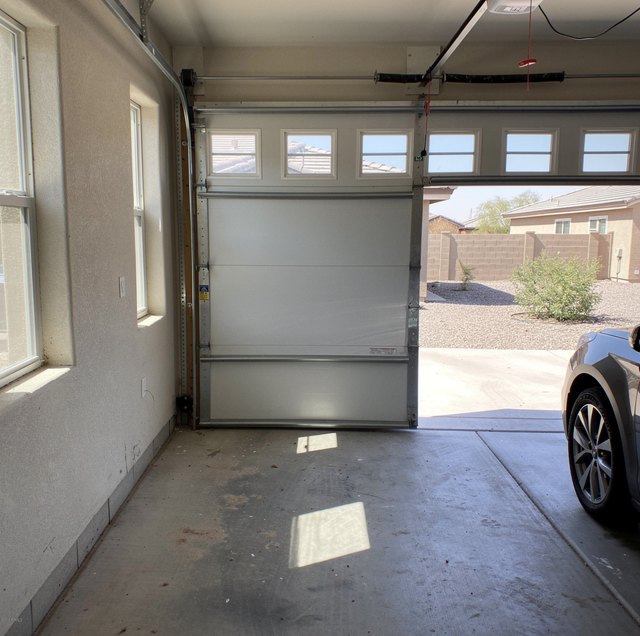
Quick Answer: An insulated garage door uses a foam core sandwiched between two steel or aluminum skins, giving it a measurable R-value that slows heat transfer, dampens noise, and holds its shape better under repeated stress. A non-insulated door is a single layer of material with no thermal barrier, so it costs less upfront but transfers outside temperature into the garage almost immediately. For an attached garage, where a shared wall or a room above the garage means that temperature swings reach the living space, insulation usually earns its keep faster than in a detached, standalone structure.
A garage that shares a wall with the kitchen, the laundry room, or a bedroom above it behaves differently than a garage sitting off on its own. Whatever temperature the garage eventually settles into pushes through that shared wall, and the door, which covers roughly a third of the garage's exterior surface area, either slows that transfer or does nothing to stop it. Homeowners shopping for a replacement door often treat the insulated-versus-non-insulated question as a simple upgrade decision, but for an attached garage it is closer to a comfort and noise decision than a purely mechanical one.
What Insulation Actually Changes Inside the Door
A non-insulated garage door is a single-skin panel made of steel, aluminum, wood, or fiberglass, hung on a track. It does its job of opening and closing, but that thin skin has almost no ability to resist heat moving through it in either direction. Whatever temperature sits on one side of the door quickly matches the other side, because there is no material in between to slow the exchange.
An insulated door adds a layer of rigid foam, either polystyrene or polyurethane, bonded between two skins instead of just one. Polyurethane is typically injected and expands to fill the entire panel cavity, bonding to both metal skins and providing structural rigidity along with thermal insulation. Polystyrene comes as a pre-cut foam board slipped between the skins, which insulates well but does not bond to the metal as well, so the panel flexes a bit more under pressure. Both options beat a bare-metal skin by a wide margin, but the difference between the two matters when durability is factored in.
Reading an R-Value Without Getting Lost in the Number
Garage door listings often print an R-value, a rating of how well a material resists heat flow, with higher numbers meaning better resistance. A non-insulated steel door typically carries a rating near zero, since a single sheet of metal offers almost no resistance. A polystyrene-core door usually lands somewhere in the R-6 to R-9 range, while a polyurethane-core door of similar thickness often reaches R-12 to R-18 or higher, depending on panel thickness and construction.
That number matters less as an exact figure and more as a relative marker. A door with a meaningfully higher R-value slows the rate at which outside temperature reaches the inside of the garage, which is the entire point for a room that touches living space. A door with a low or zero rating does the opposite: it lets outside conditions establish themselves inside the garage almost as fast as they change outdoors.
The Comparison Table
| Factor | Non-Insulated Door | Insulated Door |
|---|---|---|
| R-value/energy efficiency | Near zero resistance; garage temperature tracks outdoor temperature closely | Meaningfully higher resistance; garage holds a more moderate temperature range |
| Temperature stability in the garage | Swings quickly with outdoor conditions, which can push through a shared wall into the house | Buffers swings, reducing how much temperature transfer reaches an adjoining room |
| Noise dampening | Thin single skin transmits street noise, wind, and the door's own operating sound more directly | Foam core absorbs vibration and sound, quieting both outside noise and the door's own motion |
| Durability/dent resistance | Single skin dents more easily from impacts and can oil-can, or ripple, under wind pressure | Foam-bonded double skin resists denting and holds its shape better under the same impact or pressure |
| Relative upfront cost | Lower upfront cost | Higher upfront cost, offset over time by comfort and energy gains |
| Best-fit scenario for an attached garage | A garage that stays unconditioned and unused as living space, with minimal shared wall exposure | A garage bordering a bedroom, living room, laundry room, or any space above or beside it that people occupy regularly |
Why an Attached Garage Changes the Calculation
A detached garage set away from the house can run hot or cold with little consequence beyond what happens to whatever is stored inside. An attached garage does not have that luxury. The wall separating the garage from the house is rarely built to the same insulation standard as an exterior wall facing the outdoors directly, because it was designed assuming the garage itself would provide some buffer. When the door on the far side of that garage does nothing to slow outside temperatures, the garage becomes almost an extension of the outdoors, and the shared wall ends up doing double duty it was not built for.
That matters most in rooms directly above or beside the garage. A bedroom over the garage, a home office along the shared wall, or a laundry room built into the same footprint all feel the effect of an uninsulated door before other parts of the house do, since heat and cold move along the shortest path available. Homeowners in that situation often notice the affected room runs noticeably warmer or cooler than the rest of the house and assume it is an HVAC or duct problem, when the actual source is the temperature sitting unchecked in the garage next door.
The Noise Difference Homeowners Notice First
Insulation's effect on sound often surprises homeowners more than its effect on temperature, mainly because it shows up daily rather than seasonally. A single-skin door acts almost like a drumhead, transmitting outside noise, wind gusts, and rain almost directly into the garage, and from there into any adjoining room. The door's own operation adds to that: a motor driving a thin metal panel produces a hollow, rattling sound that carries.
An insulated door's foam core absorbs a significant portion of that vibration before it can travel farther. Rain sounds duller, wind noise softens, and the door's own opening and closing cycle produces a lower, more contained sound rather than a sharp clatter. For a garage bordering a bedroom or a room where someone works from home, that noise reduction often matters as much as the temperature benefit, particularly for an early-morning opener cycle or a late-night arrival that would otherwise carry through a shared wall.
Durability Differences Under Daily Use
Beyond comfort and noise, the two door types age differently under normal wear. A single-skin panel flexes more under wind load or an accidental bump, and repeated flexing over time can leave a visible ripple across the panel known as oil-canning, a cosmetic issue that also signals the metal is working harder than a bonded panel would. A stray basketball, a bike handlebar, or a car mirror clipping the door tends to leave a more visible dent in a thin single skin than in a foam-bonded panel, since the foam core adds resistance against that kind of point impact.
An insulated door's added rigidity comes from the bond between the foam and the two metal skins, which acts almost like a structural sandwich rather than a single flexible sheet. That construction holds its shape better across seasonal temperature swings and daily operating cycles, which can translate into fewer cosmetic dents and a longer run before the door needs panel repair or replacement.
Weighing the Higher Upfront Cost
An insulated door carries a higher upfront cost than a comparable non-insulated model, largely because of the added foam core, the more involved manufacturing process, and often a heavier-duty track and opener setup needed to handle the additional weight. That cost difference is real and worth planning for rather than glossing over.
The way to weigh it is against what the door is actually doing for the space behind it. A detached, rarely used garage with no shared living space nearby may never recoup that higher cost in a way that matters, since there is little for the insulation to protect against. An attached garage bordering a bedroom, office, or living area is a different equation: the insulation is reducing a temperature and noise transfer that homeowners feel every day, not just on the hottest or coldest days of the year, which tends to make the higher upfront cost easier to justify over the years the door stays in service.
Questions Worth Asking Before Choosing
A few practical questions help narrow the decision beyond the comparison table alone. Is there a bedroom, office, or living space directly above or beside the garage? Does the garage currently run noticeably hotter or colder than the rest of the house? Is the door's operating noise something anyone in the house currently notices or comments on? Is the existing door already showing dents, ripples, or gaps around the panel edges that suggest it is nearing the end of its service life anyway? Answering those honestly, rather than defaulting to whichever door costs less on paper, tends to point toward the option that actually solves the problem a homeowner is dealing with.
What a Technician Checks Before Recommending Either Option
A proper assessment goes beyond just measuring the opening and quoting a door. A technician walking through an attached garage typically checks the condition of the shared wall, whether the garage currently has insulation in its walls or ceiling, how the existing door is performing, and whether the track and opener can support the added weight of an insulated panel without upgrading other hardware. That last point matters more than homeowners expect: an insulated door weighs meaningfully more than a non-insulated one of the same size, and an opener sized for a lighter door may need a spring adjustment or a full opener upgrade to handle the new weight safely and reliably.
Frequently Asked Questions
Not always, but it depends on the weight difference between the old door and the new one. An insulated door typically weighs more than a comparable non-insulated door, and if the increase is significant, the existing spring tension and opener may need to be adjusted or upgraded to lift the heavier panel safely and consistently.
No single door eliminates temperature transfer entirely. Insulation slows the rate of transfer and reduces how far the garage swings toward outdoor extremes, but the garage will still trend warmer or cooler along with the seasons. The benefit is in the pace and degree of that swing, not a complete stop to it.
Polyurethane generally provides a higher R-value per inch of thickness and bonds directly to both metal skins, adding structural rigidity along with insulation. Polystyrene still insulates well and tends to be a lower-cost option, so it remains a reasonable choice for a homeowner prioritizing budget over the highest possible R-value.
Some non-insulated doors accept insulation kits that fit foam panels into the back of each section, which can help somewhat with temperature and noise. That approach rarely matches the performance of a factory-bonded insulated door, since the foam is not bonded to the metal skin the same way, but it can be a reasonable middle step for a door that is otherwise in good working condition.
Both, to different degrees. The insulated panel absorbs a share of the vibration and rattle that travel through the door itself as it operates, reducing the overall sound reaching an adjoining room. The opener motor's sound is a separate factor, and a belt-drive opener paired with an insulated door typically produces the quietest overall combination.
Both types can last many years with regular maintenance, but an insulated door's bonded-panel construction tends to hold its shape and resist dents and oil canning longer under the same daily use and weather exposure. Actual lifespan still depends heavily on maintenance, cycle count, and the proper balance of the track, rollers, and springs over time.
Schedule a garage door insulation assessment — a technician can evaluate your attached garage's shared wall, the current condition of your door, and the opener's capacity before recommending an insulated or non-insulated replacement. Lucky Boy Garage Door LLC serves Mesa and the East Valley. ROC #341884. Call (480) 906-4474.
