
Garage Door Won't Open Above 110 Degrees? Here's the Real Reason
Quick Answer: A garage door opener that quits once the mercury climbs past 110 degrees is usually reacting to heat inside the logic board or capacitor, a warped panel throwing the safety sensors out of alignment, or spring steel that has lost tension from months of thermal cycling. Check the breaker, the remote batteries, and the manual release before assuming the worst. If the motor hums without moving the door, or the door refuses to close on its own, stop and call a technician rather than forcing it.
Your garage door has worked all summer without a hiccup, and then, on the one afternoon when the thermometer tips past 110, it just stops responding. The remote clicks, nothing happens. Maybe the motor hums for a second and quits. Maybe the door starts down and reverses right back up before it ever touches the floor. It feels random, but it almost never is. This intense heat pushes on every part of a garage door system at once, and something usually gives before the day cools off.
Why Extreme Heat Targets the Opener First
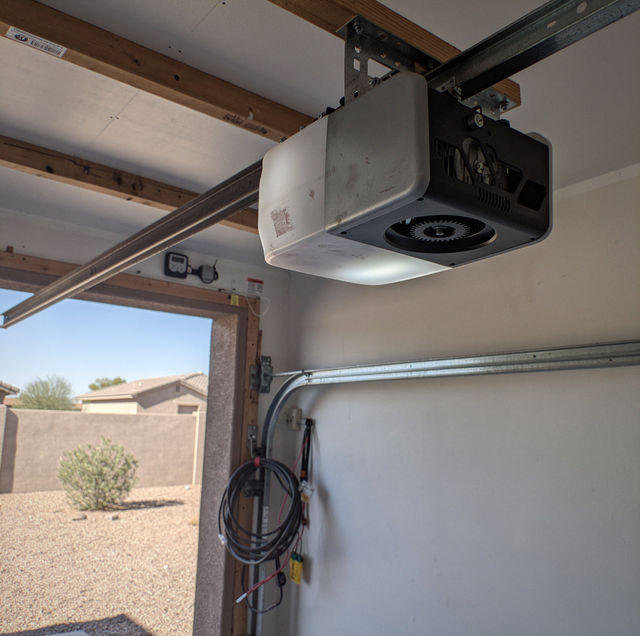
A garage door opener is built around a small logic board, a capacitor, and a motor, all sealed inside a plastic housing mounted at ceiling height, which is the hottest layer of air in the whole garage. On a day that hits triple digits outside, the space right under that roofline can run considerably hotter still, and electronics were never designed to run comfortably in that range.
The circuit board inside the opener carries components rated for a specific temperature ceiling. Push past it, and the board can start throwing false signals, refusing to respond to the remote, or shutting down mid-cycle as a built-in safety measure against overheating. The capacitor, which stores and releases the burst of power the motor needs to start moving a few hundred pounds of door, is especially heat-sensitive. Capacitors degrade faster in sustained high heat, and a capacitor running on borrowed life may deliver just enough charge to make the motor hum without ever producing the torque to lift the door. That hum-and-stall pattern is one of the clearest heat signatures a homeowner will notice.
Metal expands as it heats, too, and an opener's internal gears and chain or belt drive are cut to tolerances that assume a normal operating range. On the hottest days, that expansion can bind a chain drive just enough to trip the opener's built-in force sensor, which reads the extra resistance as an obstruction and stops the door rather than risk the motor burning out.
The Panel Warping That Throws Sensors Off
Steel and aluminum garage door panels expand under direct sun the same way the opener housing does, and a door facing full afternoon exposure can run noticeably hotter on its outer skin than the surrounding air. Repeated heat cycles, hot during the day and cooling overnight, gradually flex a panel out of its original flat plane. Over enough summers, that flexing can leave a door slightly bowed or a section sitting a few millimeters off from where it started.
That small shift matters more than it sounds like it should, because the two safety sensors mounted near the bottom of the tracks have to stay aimed precisely at each other to work. If heat-driven warping nudges the track or the bracket holding a sensor even slightly, the beam between them drifts off-center. The door will start to close, "see" an obstruction that isn't there, and reverse back open, or it may refuse to close at all with a blinking light on one of the sensor units. Homeowners often assume something is blocking the door when the actual cause is a fraction of an inch of heat-driven misalignment.
What Heat Does to Springs and Lubricant
Torsion and extension springs are engineered to flex through tens of thousands of open-and-close cycles, but they do that job under a specific tension calibrated at installation. Heat doesn't melt a spring, but sustained high temperatures accelerate metal fatigue, meaning the steel loses a small amount of its original tension with every cycle it completes in extreme conditions faster than it would in mild weather. A spring nearing the end of its life may still lift the door on a cool morning yet fail to provide enough force once the coil itself heats up and expands slightly, leaving the opener straining against a door that suddenly feels heavier than it should.
Lubricant on the rollers, hinges, and track behaves the opposite way heat-stiffened people expect: rather than getting sluggish, most garage door grease thins out in extreme heat and can drip or migrate away from the parts that need it. Dry rollers grinding in a bone-dry track create extra resistance, which again reads to the opener's force sensor as something blocking the door, triggering the same stall-and-reverse pattern that panel warping and spring fatigue both cause. Three different mechanisms, one shared symptom.
Signs You Are Dealing with a Heat-Related Failure
A handful of patterns show up again and again during the hottest stretch of the season.
The Motor Hums but the Door Doesn't Move: This suggests a weak capacitor or an overheated motor winding, rather than anything mechanical blocking the door.
The Door Reverses Right Before Closing: A near-universal sign of a misaligned safety sensor, often traced back to heat-driven panel or bracket movement rather than a genuine obstruction.
The Remote Works Intermittently, Then Not at All: Suggests the receiver board itself is overheating, especially if the wall button also stops responding at the same time.
The Door Feels Heavier by Hand Than It Used To: A sign that spring tension has dropped, which the opener has to compensate for every single cycle until something in the drive train gives out.
Everything Works Fine After the Sun Goes Down: One of the strongest tells of all. If the door opens and closes normally once temperatures drop in the evening, the problem is almost certainly heat-triggered rather than a component that has failed outright.
What's Safe to Check Yourself
A few checks take a couple of minutes and carry no risk.
Check the Breaker: Garage door circuits sometimes share a breaker with other high-draw appliances, and a tripped breaker looks identical to a dead opener from the driver's seat. Flip it back and try the remote again.
Swap the Remote Battery: Heat degrades battery chemistry faster than mild weather does, and a remote that has been baking on a dashboard or a garage shelf all summer is a common, cheap culprit.
Wipe the Sensor Lenses: Dust and pollen film build up quickly in dry heat and can weaken the beam between the two sensors enough to trigger a false reversal. A soft cloth wipe on both lenses, with the door power left on, sometimes clears the issue immediately.
Try the Manual Release, Only with the Door Fully Down: If the opener won't respond at all, the manual release lets you operate the door by hand while it cools. Only pull that cord when the door is completely closed; disconnecting a raised door from the opener can cause it to drop suddenly if the spring has already weakened.
Give the Opener Time to Cool. If the housing feels hot to the touch, giving the unit 20 or 30 minutes in the shade before trying again resolves a surprising number of one-off stalls caused by an overheated board.
What Needs a Professional
Some heat-related symptoms indicate a situation that shouldn't be handled without training.
Springs under tension are not a do-it-yourself repair. If the door feels noticeably heavier than it used to, or the springs show visible gaps in their coils, that tension has to be released and reset with the right tools, not adjusted by hand. A torsion spring under load can cause serious injury if it lets go while someone is working near it.
A sensor that stays misaligned after a lens cleaning usually means a bracket has shifted, and re-aiming it correctly, then confirming the beam holds through several cycles, is worth having a technician handle so the fix actually lasts through the next heat wave rather than drifting again in a week.
A logic board or capacitor that has already failed needs to be replaced, not a workaround. Running an opener on a failing board risks a burned-out motor on top of the part that already quit, turning a moderate repair into a full opener replacement.
Reducing Heat-Related Failures Going Forward
A few habits cut down how often heat catches a door off guard. Shade over the door, even a simple awning or a mature tree canopy, keeps the panel and the sensors several degrees cooler than full sun exposure, which slows the warping cycle that throws sensors out of alignment. A yearly tune-up that checks spring tension, roller condition, and sensor alignment before the hottest months hit catches a weakening spring or a drifting bracket while it is still a small adjustment rather than a stranded door. Choosing a garage door lubricant rated for high heat, rather than a general-purpose oil, keeps rollers and hinges properly coated throughout the day when thinner lubricants tend to run off. None of these habits eliminate heat's effect on the system entirely, but each one buys the hardware more margin before it reaches a breaking point.
Frequently Asked Questions
Yes, if the overheating is severe or repeated enough. A capacitor or logic board that overheats occasionally may recover once it cools, but repeated stress at high temperatures shortens the lifespan of both parts and can eventually cause one to fail outright, usually mid-summer during the hottest stretch of the year.
Afternoons are typically when both the ambient air and the sun-facing side of the door reach their peak temperatures for the day. If the opener behaves normally in the morning and struggles by mid-afternoon, that timing pattern is a strong clue that heat, not a mechanical defect, is driving the symptom.
A few tries are fine, but repeated attempts against a door that isn't moving can stress the motor further or push a marginal capacitor past the point where it recovers. If two or three attempts produce nothing, stop and check the breaker and battery rather than continuing to press the button.
Both heat up, but a dark-colored metal panel in direct sun can reach a noticeably higher surface temperature than the shaded opener unit mounted inside the garage. That surface heat drives the panel-warping effect that throws off sensor alignment, even while the opener itself is technically running cooler.
A lighter, more reflective finish does absorb less heat than a dark one, which can modestly reduce how hot the panel gets during peak sun exposure. It won't eliminate heat-related wear on its own, but paired with shade and routine maintenance, it is one more small factor working in the door's favor.
If the fix is as simple as a battery swap or a tripped breaker, there's no rush. But once you notice the door reversing on its own, the motor humming without moving the door, or the door feeling unusually heavy, those are signs of hardware under strain, and getting it looked at before the next heat wave is safer than waiting for a full failure.
Get your opener checked before the next heat wave — a technician can catch a weak capacitor, spring, or sensor before it leaves you stranded. Lucky Boy Garage Door LLC serves Mesa and the East Valley. ROC #341884. Call (480) 906-4474.
