
How Long Do Garage Door Springs Last With Daily Use?
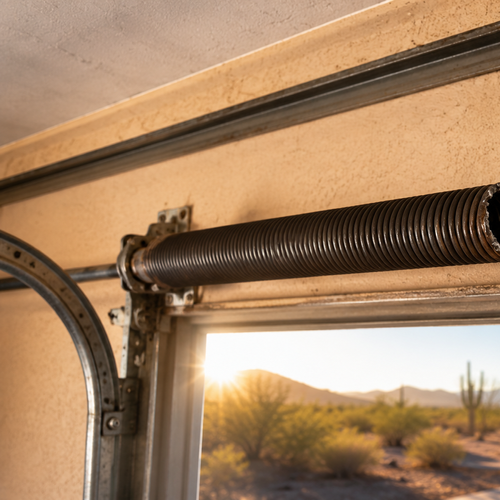
Quick Answer: Garage door springs are rated in cycles — one open and close is one cycle — and a standard spring is often rated for around 10,000 cycles, which works out to roughly 7 to 9 years of typical use. But the real lifespan depends entirely on how often the door runs. A household that opens the door many times a day can use up that cycle life in just a few years, while light use stretches it much longer. Heavy daily use, extreme temperatures, rust, and poor maintenance all shorten spring life. Watch for signs like a door that's heavy to lift, jerky movement, loud bangs, or visible gaps in the spring.
Garage door springs don't last forever, and the most common question after one breaks is how long the replacement should last. The honest answer isn't a number of years — it's a number of cycles. Once you understand that, you can estimate the real lifespan for your home based on how much you actually use the door.
Springs Are Rated in Cycles, Not Years
A garage door spring's life is measured in cycles, where one cycle is a single full open-and-close. Standard springs are commonly rated around 10,000 cycles. That rating is a useful way to think about lifespan, because it accounts for the real variable: usage. Two identical springs can last very different lengths of time depending on how many cycles a day they go through.
To translate cycles into years, you have to factor in how often your door runs. A spring rated for 10,000 cycles used twice a day lasts far longer than the same spring used eight or ten times a day.
What That Means for Your Home
Consider how a garage door actually gets used. For many households, the garage is the main entrance — the door goes up and down as people leave for work and school, come home, run errands, and return. Each of those is a cycle, and they add up fast.
| Daily cycles | Rough lifespan of a 10,000-cycle spring |
|---|---|
| 2 per day | Around 13+ years |
| 4 per day | Around 7 years |
| 6 per day | Around 4–5 years |
| 8+ per day | A few years |
This is why a busy household can wear out springs in just a few years, even though the springs are working exactly as designed. The springs didn't fail early — they simply reached their cycle limit faster because the door ran more often. Higher-cycle springs are available for heavy-use situations and last longer before replacement.
What Shortens Spring Life
Beyond sheer usage, several factors wear springs out faster. Temperature swings are hard on metal, and a spring that goes through repeated heating and cooling can fatigue sooner. Rust is a major enemy — corrosion weakens the metal and increases friction as the spring coils rub, accelerating wear; this is why a light lubrication of the springs is part of good maintenance. A door that's out of balance forces the springs and opener to work harder than they should, shortening the life of everything. And poor-quality or improperly sized springs simply don't last as long as the right spring matched to the door.
The Signs a Spring Is Wearing Out
Springs usually give some warning before they fail completely. The door may start to feel heavy or refuse to stay open partway, a sign that the springs are losing their counterbalancing strength. Movement can become jerky or uneven. You might hear loud, sharp noises during operation. And on a torsion spring, you may see a visible gap in the coil, which means it has broken — a broken spring often makes a startlingly loud bang when it goes. When the door suddenly becomes very hard to lift, a spring has usually failed.
If your door starts feeling heavier than usual or hesitates when lifting, don't wait for the spring to snap. Have it checked while it's still intact. Catching a worn spring early avoids being stranded with a door that won't open — and a sudden break can damage other parts of the door.
Why Replacing in Pairs Often Makes Sense
On a two-spring door, when one spring reaches the end of its cycle life, the other is usually close behind, since both have gone through the same number of cycles. Replacing only the broken one means the second is likely to fail soon after, leading to another service call and another sudden failure. Many technicians recommend replacing both springs together on a two-spring system, so they're matched and wear evenly going forward. It's a practical way to avoid back-to-back breakdowns and keep the door balanced. There's a hidden cost to one-at-a-time replacement that's easy to miss: every time a spring fails unexpectedly, the door is out of service until it's fixed, and the imbalance from a single fresh spring paired with a tired one can put extra strain on the opener and cables in the meantime. Matching the pair keeps the whole system pulling evenly, which is gentler on every other part of the door over the long run. Replacing both also gives the technician a chance to inspect the cables, rollers, and hardware that work alongside the springs, catching related wear before it turns into the next surprise. Bundling that look into a single visit is usually the most efficient way to keep the door dependable.
Frequently Asked Questions
Most likely because the door is used many times a day. Since springs are rated in cycles, heavy daily use reaches that limit faster — a door cycled eight or more times a day can use up a standard spring's life in just a few years. The springs didn't fail early; they simply hit their cycle limit sooner due to frequent use.
One cycle is a single complete open-and-close of the door. Spring ratings are based on cycles because that's what actually wears them out. A 10,000-cycle spring is built to handle about that many open-close operations before it's expected to wear out, regardless of how many years that takes based on your usage.
Watch for a door that feels heavy or won't stay open partway, jerky or uneven movement, loud noises during operation, and, on torsion springs, a visible gap in the coil. A sudden loud bang, followed by a door that won't open, usually means a spring has broken. These signs often appear before complete failure.
Good maintenance helps. Keeping the springs lightly lubricated reduces friction and rust, keeping the door balanced prevents the springs from overworking, and addressing rust early protects the metal. You can't change how many times you use the door, but for heavy use, higher-cycle springs are available that last longer before needing replacement.
On a two-spring door, replacing both at once is often recommended. Since both springs have gone through the same number of cycles, when one fails, the other is usually near the end too. Replacing only the broken one frequently leads to the second failing soon after. Replacing both keeps them matched and the door balanced, avoiding repeat breakdowns.
Think in Cycles, Watch for the Signs
Garage door springs last a number of cycles, not a fixed number of years, so the more your door runs, the sooner you'll need new springs — a busy household can go through them in just a few years. Maintenance, balance, and rust control help, and higher-cycle springs are an option for heavy use. Watch for a heavy door, jerky motion, and loud noises, and replace worn springs before they strand you.
Garage door feeling heavy or springs looking worn? — Get them inspected and replaced with correctly sized springs before they break. Mesa Garage Door Repair serves Mesa and the East Valley. ROC #341884. Call (480) 906-4474.
