
Torsion vs Extension Springs: Which Does Your Door Use?
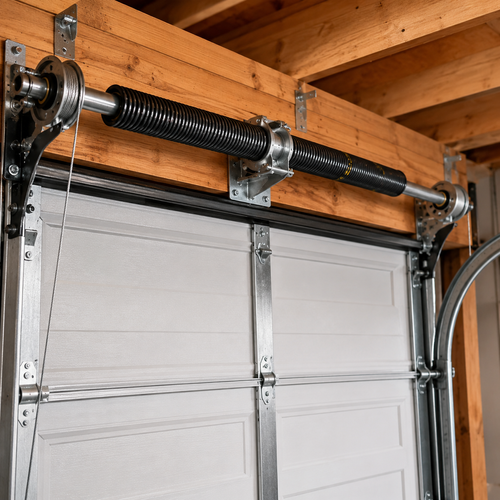
Quick Answer: Garage doors use one of two spring systems. Torsion springs mount on a horizontal bar above the door opening and twist to store energy, lifting the door with a controlled, balanced motion. Extension springs run along the horizontal tracks on each side of the door and stretch to store energy. To tell which you have, look above the door: a spring or two on a shaft across the top means torsion; long springs stretching along the side tracks mean extension. Torsion systems are generally more durable, smoother, and safer, while extension springs are common on lighter doors. Either way, springs are under extreme tension and are not a DIY repair.
The springs are the hardest-working part of your garage door — they do the heavy lifting that lets a door weighing well over a hundred pounds glide up with the touch of a button. There are two main types, and knowing which your door uses helps you understand how it works and why spring repair is a job that demands respect.
Why Springs Do the Real Work
A garage door is heavy, and the opener motor doesn't actually lift most of that weight. The springs are. They store mechanical energy and release it to counterbalance the door, so the door is nearly weightless in motion and the opener only has to guide it. Without functioning springs, the opener can't lift the door, and lifting it by hand is a genuine struggle. That's why a broken spring stops a garage door cold — the counterbalance is gone.
How Torsion Springs Work
Torsion springs mount on a metal shaft that runs horizontally above the door opening. When the door closes, the springs wind up, storing energy by twisting; when the door opens, they unwind and release that energy to help raise it. The motion is controlled and balanced, with the force distributed evenly across the door through cables and drums at each end of the shaft.
Because of this design, torsion systems tend to operate more smoothly, last longer, and control the door better, especially on heavier doors. They take up space above the opening rather than along the sides.
How Extension Springs Work
Extension springs run along the horizontal tracks on either side of the door, parallel to the ceiling. They work by stretching: as the door closes, the springs extend and store energy, and as it opens, they contract and pull to help lift the door. You'll see them as long springs mounted above each side track.
Extension springs are common on lighter doors and in homes with limited headroom above the opening. A properly set up extension system includes safety cables running through the springs — an important detail, because of how these springs behave if they break.
How to Tell Which You Have
Identifying your type takes only a glance in the right place.
| Look here | Torsion | Extension |
|---|---|---|
| Above the door opening | Spring(s) on a horizontal shaft | Nothing on a center shaft |
| Along the side tracks | Clear | Long springs stretching front-to-back |
| Motion | Twists/winds | Stretches/contracts |
| Typical use | Heavier doors, smoother operation | Lighter doors, low headroom |
| Safety cables | Built into the shaft design | Cables run through the springs |
Stand inside the garage with the door closed and look up. If you see one or two springs mounted on a bar directly above the door, you have torsion springs. If the area above the door is clear but you see long springs running along the upper side tracks, you have extension springs.
Why the Difference Matters
Knowing your spring type matters for a few reasons. The systems wear and fail differently, the replacement parts and adjustments are different, and the safety considerations differ. Torsion systems generally deliver smoother, more balanced operation and tend to handle weight and repeated use better, which is why many heavier doors use them. Extension systems are a practical fit for lighter doors and tight headroom. When a spring fails, the correct replacement has to match the door's weight and the system type precisely — the wrong spring throws off the balance and strains the whole door, opener included.
Garage door springs are under extreme tension, storing enough energy to cause serious injury if they release suddenly. Adjusting or replacing them — torsion or extension — is not a DIY job. A spring or its hardware coming loose under tension can strike with dangerous force. Leave spring work to a trained technician with the right tools.
Why Spring Work Belongs to a Professional
The reason spring repair is so consistently flagged as a professional job is the tension involved. Both spring types hold a tremendous amount of stored energy under normal operation, and that energy doesn't care that you're trying to help. Releasing, winding, or replacing a spring incorrectly can cause it to slip or snap with enough force to cause serious harm. A trained technician has the specific tools — like proper winding bars for torsion springs — and the experience to do it safely, and to size and balance the replacement so the door operates correctly. Getting the right spring, installed and tensioned properly, is what keeps the door working smoothly and the opener from being overworked.
Frequently Asked Questions
Look above your closed garage door from inside. If you see one or two springs mounted on a horizontal shaft directly above the opening, those are torsion springs. If the space above the door is clear but long springs run along the upper side tracks, those are extension springs. The location is the easiest way to tell them apart.
Torsion springs generally offer smoother, more balanced operation and tend to last longer and handle heavier doors better, which is why many doors use them. Extension springs are a common, practical choice for lighter doors and homes with limited headroom. "Better" depends on the door and setup, but torsion systems are often preferred for durability and smooth operation.
Because the springs, not the opener, do the heavy lifting by counterbalancing the door's weight. When a spring breaks, that counterbalance is lost, so the opener can't raise the door, and lifting it by hand becomes very difficult. A broken spring is one of the most common reasons a garage door suddenly won't open.
It's strongly advised against. Both spring types are under extreme tension and store enough energy to cause serious injury if they release suddenly during work. Proper replacement requires specific tools and training to do safely and to size and balance the new spring correctly. This is a repair that should be left to a trained technician.
Safety cables run through extension springs to contain them if they break. Because an extension spring is stretched under tension, a sudden break can send the spring flying with dangerous force. The safety cable captures the broken spring and keeps it from becoming a projectile. A properly set up extension spring system includes these cables.
Yes. The replacement spring has to match both the system type and the door's specific weight and dimensions. The wrong spring throws off the door's balance, making it operate poorly and straining the opener and other components. This is part of why correct identification and professional sizing matter — a mismatched spring causes problems beyond just the spring itself.
Know Your Springs, Respect the Tension
Garage doors run on either torsion springs above the opening or extension springs along the side tracks, and a quick look up tells you which you have. The type affects how your door operates, wears, and gets repaired. What doesn't change is the tension: both store enormous energy, which is why spring work is firmly a job for a trained technician with the right tools, not a weekend project.
Need a garage door spring inspected or replaced? — Get it handled safely by a technician with the right tools and the correctly sized spring. Mesa Garage Door Repair serves Mesa and the East Valley. ROC #341884. Call (480) 906-4474.
