
Why Garage Door Weather Seals Crack and Shrink in the Desert
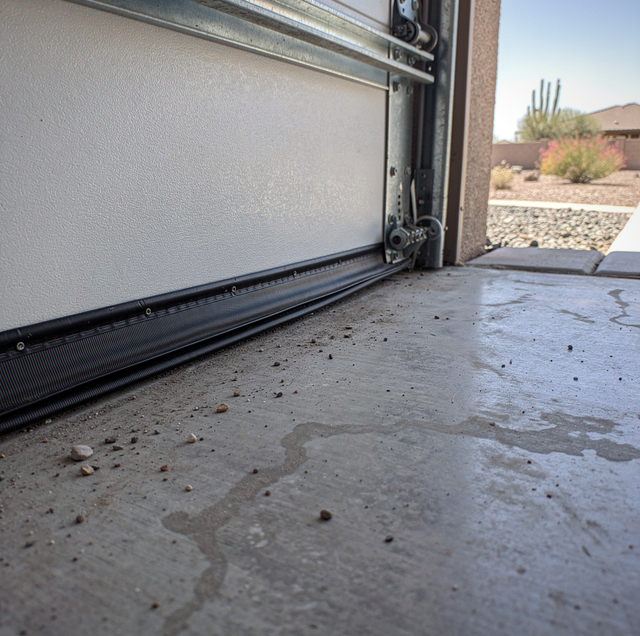
You crouch down to sweep out the garage and notice daylight coming through the bottom of the door in three or four thin lines instead of a solid seam. A few months ago that same strip of vinyl hugged the concrete without a gap. Now it looks shrunken, almost as if it lost weight, and when you press a finger into it, the material feels stiff rather than springy. That seal isn't dirty or loose. It's aged out, and heat plus sun exposure is almost always the reason it happened faster than the label on the box promised.
What a Weather Seal Is Actually Made Of
Garage door weather stripping is a polymer product, usually PVC vinyl or a rubber compound such as EPDM, extruded into a bulb or fin shape and either nailed into a retainer track along the bottom of the door or pressed into a channel along the jambs and header. That polymer remains flexible because of plasticizers and stabilizers incorporated during manufacturing. Those additives are what let a cold, stiff length of vinyl bend around a concrete lip a thousand times a year without splitting.
Every polymer additive has a service life, and that life is shortened by two things working together: ultraviolet light and sustained high temperature. A seal mounted in a shaded garage in a mild climate might hold its flexibility for the better part of a decade. The same seal, exposed to direct sun for much of the day and baking against hot concrete and steel for months at a stretch, can start showing signs of damage in a fraction of that time.
How Heat and UV Turn Flexible Rubber into Brittle Plastic
Ultraviolet light carries enough energy to break the chemical bonds holding a polymer chain together, a process chemists call photooxidation. Once those bonds start to break, the material relinks itself in a more rigid pattern. The result is a seal that feels hard and glassy instead of soft and pliable. Bend it and, instead of flexing, it develops a whitish crease line where the surface has essentially turned to plastic dust at a microscopic level.
Heat speeds up every one of those reactions and adds damage of its own. High sustained temperatures cause the plasticizer molecules inside vinyl to migrate to the surface and evaporate off, a process called plasticizer loss. That's the greasy-looking film you sometimes find on a garage floor under an old seal; it's the compound's own softening agent leaving the material behind. Once enough plasticizer is gone, the vinyl can't return to its original shape after being compressed, and it stops behaving like rubber at all.
The two effects compound each other. UV breaks down the polymer surface, while heat drives out the plasticizer beneath, so a seal facing direct afternoon sun for years is fighting a two-front battle that a shaded, cooler seal never has to face.
Why the Seal Shrinks and Pulls Away from the Door Edge
Cracking gets the attention, but shrinkage is the quieter half of the failure and often the more expensive one to ignore. As a plasticizer evaporates from vinyl, the material loses volume and flexibility. A bottom seal that once ran the full width of the door can pull back an inch or more at each end over several seasons, leaving a triangular gap right where the door meets the slab. Side seals do the same thing along their length, curling away from the jamb instead of sitting flush against it.
That shrinkage is rarely uniform. The section of a seal that catches the most direct sun through the day contracts faster than a stretch that sits in partial shade from a tree, an overhang, or a neighboring wall. That's why a bottom seal often looks fine on one end and visibly pulled back on the other: it's the same material aging at two different rates because it's absorbing two different amounts of radiant energy.
Once a seal shrinks, it also loses its compression fit. A healthy bulb seal is slightly oversized for its channel so it presses against the surface it's sealing. A shrunken seal sits loose in the retainer track, which means even a seal that hasn't cracked yet may already be letting air and debris through simply because it no longer makes full contact with the floor or jamb.
What You Actually Lose Once the Seal Fails
A gap in the weather seal isn't just cosmetic. Fine dust and grit work their way in along the bottom edge and settle into the track, where they mix with roller grease and turn into a gritty paste that accelerates wear on the rollers and hinges. Dry heat pulled in through a cracked or shrunken seal raises the temperature swing inside the garage itself, which matters if the space stores anything heat-sensitive or if the garage shares a wall with living space. A gapped seal is also an entry point for scorpions, spiders, and rodents, all of which are drawn to the cooler, darker space behind a garage door and will use even a quarter-inch opening to get in.
Light leakage is the easiest way to self-diagnose the problem. Stand inside the closed garage during the day with the lights off and look for daylight along the bottom and sides of the door. Any visible line of light indicates that outside air, dust, and pests share the same opening.
Symptom, Cause, and What to Do
| What You Notice | Likely Cause | Recommended Action |
|---|---|---|
| Thin lines of daylight along the bottom | Shrinkage pulled the bulb seal away from the slab | Measure the gap; replace the bottom seal if it no longer compresses |
| Seal feels stiff and cracks when bent | UV and heat degraded the plasticizer, hardening the material | Replace before the crack spreads into a full split |
| Whitish or chalky surface on the seal | Surface-level photooxidation breaking down the outer layer | Inspect closely; often an early sign to plan replacement soon |
| Greasy residue on the floor near the seal | Plasticizer migrating out of the vinyl | Confirm the seal has lost flexibility, not just gotten dirty |
| Dust buildup along tracks and rollers | Gaps letting in fine debris | Clean the track and check the seal's fit at the same time |
| Uneven wear, one side worse than the other | Uneven sun exposure across the seal's length | Note which side faces more direct sun for future material choice |
Not All Seal Material Handles Heat the Same Way
Standard PVC vinyl is the most common and least expensive weather seal material, and it's also the most vulnerable to plasticizer loss under sustained heat. EPDM rubber compounds retain their flexibility longer because the polymer itself is more UV-stable, though they still eventually harden. Silicone-based seals cost more up front but resist both UV degradation and temperature fluctuations noticeably better than vinyl or standard rubber, which is why some manufacturers now offer them specifically for high-heat, high-sun installations. Retainer-track style bottom seals also tend to outlast simple bead seals stapled directly to the door, since the track shields part of the seal's cross-section from direct sun exposure.
How Long a Seal Actually Lasts Under Heavy Sun Exposure
Manufacturers typically rate standard vinyl weather seals for a five-to-seven-year range under moderate conditions. A door facing hours of direct, intense sun each day, especially on a south- or west-facing exposure, can see meaningful hardening and shrinkage in two to three years instead. The bottom seal usually fails first because it absorbs radiant heat from both the sun above and the hot concrete or asphalt below, essentially cooking from two directions. Side and top seals, mounted vertically or under an overhang, typically last somewhat longer simply because they get less direct, sustained exposure.
Simple Habits That Slow the Damage
You can't stop UV and heat from reaching the seal, but a few habits noticeably extend its working life. Wiping the seal down periodically removes grit that acts like sandpaper every time the door cycles, which accelerates surface cracking in material that's already stiffening. A light coat of a rubber-safe UV protectant, applied a couple of times a year, adds a sacrificial layer that absorbs some of the UV damage rather than the seal itself. Keeping the bottom track clear of debris lets the seal seat fully against the slab rather than being propped up by grit, which causes uneven compression and premature cracking at the high spots. None of this stops the clock permanently, but it can buy real time between replacements.
Weighing a Full Replacement Against a Patch
A seal with one small crack and no visible shrinkage can sometimes be trimmed and reseated to buy a season, but that's a stopgap, not a fix. Once a seal has visibly pulled away from the slab or jamb, or cracks in more than one spot, patching it usually takes more time than it's worth, since the underlying material has already lost the elasticity that made it functional. At that point, a full-length replacement, matched to the door's actual channel size and seal style, restores a proper seal rather than leaving a compromised section still doing half its job.
Weather seals are inexpensive, low-drama parts of a garage door, right up until the day they aren't sealing anything at all. Catching hardening and shrinkage early, while the seal is still doing most of its job, is simpler than waiting for a scorpion sighting or a floor full of dust to force the issue.
Frequently Asked Questions
Press a thumb into the seal and watch how it responds. Healthy vinyl or rubber springs back within a second or two. A seal that's lost its plasticizer stays dented, feels cold and hard even on a warm day, or develops a visible crease line where you bent it. That slow-rebound test catches early hardening before a visible crack ever forms.
Indirectly, yes. Darker door panels absorb more radiant heat and run hotter at the point where the bottom seal contacts the slab, raising the local temperature the seal experiences throughout the day. A lighter-colored door reflects more heat away, which can modestly slow plasticizer loss in the bottom seal, even though the seal material itself is identical.
No. The bottom seal is typically a bulb or T-style vinyl profile held in an aluminum retainer track, built to compress against the slab. The side and top seals, sometimes called jamb seals, are usually a flatter vinyl or brush-style strip fastened to the frame rather than the door itself, and they fail on a different timeline since they don't take the same direct floor-level heat.
Yes, and it's one of the more common ways scorpions, spiders, and rodents get past an otherwise closed door. A shrunk bottom seal that leaves even a narrow gap is an open invitation, since these are exactly the openings small pests look for when moving from outside heat into a cooler, dark space.
Twice a year is a reasonable habit, ideally once heading into the hottest stretch and once after it, since that's when the fastest degradation happens, and shrinkage is easiest to spot by comparing the seal's fit before and after. A quick flex test and a look for daylight gaps takes only a couple of minutes.
The bottom seal is one of the more approachable DIY replacements on a garage door, provided the new seal matches the retainer track's exact channel width and profile. Side and top seals are also manageable for most homeowners. The job gets trickier if the retainer track itself is bent, corroded, or a nonstandard size, which is when a mismatched replacement seal ends up sealing just as poorly as the one it replaced.
Schedule a weather seal inspection and replacement — a technician will check every seal on your door for hardening, shrinkage, and gaps, and then fit a replacement that matches your exact track. Lucky Boy Garage Door LLC serves Mesa and the East Valley. ROC #341884. Call (480) 906-4474.
