
Garage Door Opener Won't Close All the Way? What's Causing It
You press the button, the door starts down, and then it stops a foot off the ground, or touches down and rolls right back up. Now the garage will not seal, the house is not secure, and you are standing there pressing the button again, like that will change its mind. It will not, because the door is doing exactly what it was designed to do: refusing to close when something tells it not to.
Figuring out what is giving that signal is the whole job, and it usually comes down to a short list of causes, most of them fixable once you know which one you have.
The Door Is Following Its Safety Rules
Modern openers are built to never close on a person, pet, or object, so they watch for two things: a beam of light across the opening near the floor, and how far the door has traveled. If the light beam is broken, or the opener thinks the door has hit something or gone far enough, it stops or reverses. That is a feature, not a fault. So, a door that will not close is usually not broken; it is being told to stop by a sensor or a setting, and the fix is finding which one is sending the false signal.
The Photo-Eye Sensors Are the Usual Suspect
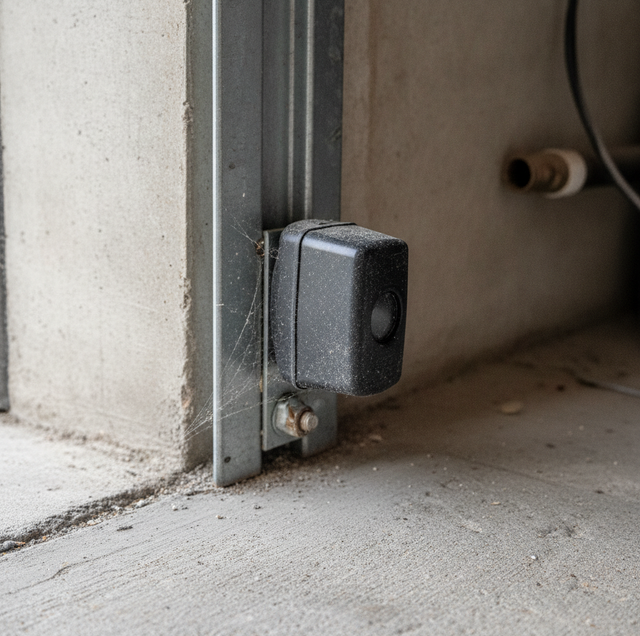
Near the bottom of each track sits a small sensor, and the two face each other across the opening with an invisible beam between them. If anything breaks that beam, or the two sensors are not pointed exactly at each other, the opener assumes something is in the way and refuses to close. This is the single most common cause of a door not sealing.
Three things throw the sensors off. They get dirty, and a film of dust on the lens blocks the beam as effectively as an object. They get bumped out of alignment, so the two no longer point at each other, often shown by a blinking light on one sensor. Or their wiring works loose, which reads the same as a blocked beam. Cleaning the lenses gently, nudging the sensors until they line up and the indicator lights go steady, and checking that nothing is sitting in the beam solves a large share of these cases.
| What you notice | Likely cause |
|---|---|
| The door reverses right after touching down | Photo-eye sensors dirty or misaligned |
| Door stops a foot up, blinking sensor light | Broken or misaligned sensor beam |
| Door stops short every time, no reversal | Close-limit/travel setting too high |
| The door reverses, and you hear it strain | Track debris or roller resistance |
| The door will not budge past a point | Obstruction in the track |
When It's the Settings or the Track, Not the Sensors
If the sensors are clean, aligned, and clear, and the door still will not close, the cause is usually the opener's travel and force settings or something physical in the door's path. Travel limits tell the opener how far the door should move; if the close limit is set too high, the opener stops the door before it reaches the floor, thinking it is already down. If the close force is set too sensitively, the opener reads normal resistance as an obstruction and reverses. And genuine physical resistance, debris in the track, a damaged roller, or a spring or cable problem that makes the door hard to move can trip the safety reverse for real. These are diagnosed by watching where and how the door stops and testing the opener's settings.
Why Dust Makes This Common
The photo-eye version of this problem is especially frequent wherever the air carries a lot of grit, and the reason is dust. Dusty conditions coat everything, and a film of that fine dust on the sensor lenses is enough to block the beam and stop the door from closing, so these calls climb whenever conditions turn dusty. The same blowing grit fouls the tracks and rollers, adding physical resistance that trips the safety reverse, and sustained heat stresses the opener, potentially affecting its settings over time. Keeping the sensor lenses wiped clean and the tracks clear goes a long way, because a dusty environment is constantly working to give the opener a reason to stop.
Frequently Asked Questions
The two photo-eyes display small indicator lights that indicate the problem before you touch anything. Typically, the sending eye shows a steady light whenever it has power, and the receiving eye shows a steady light only when it sees the beam. If the receiving eye's light is off or blinking, the beam is broken by dirt, a bump out of alignment, or a wiring fault. Many brands color-code this: green tends to mean powered, and a steady amber or red on the receiver means aligned and clear, while a flickering one means it is searching for the beam. Nudge that sensor by hand until its light stops blinking and goes solid, and the door will usually close again.
Loosen the wing nut or bracket screw holding one sensor so it can pivot, then move it slowly while watching the receiver's indicator light, and lock it down the moment the light goes steady. A useful trick is to run a string or a level between the two brackets to confirm they are at the same height, since a sensor knocked upward or downward can miss its partner even when it looks close. Both eyes should be about six inches above the floor and point dead at each other. If the light will not hold steady, no matter how you aim it, suspect a loose wire at the terminal or a pinched cable rather than alignment.
Look at the opener's travel and force settings next. The close-limit adjustment is usually a small screw or dial on the motor head; back it off a fraction so the door is told to travel a little farther, and it can seat fully on the floor. A force setting turned too sensitive reads the door's own weight as an obstruction, so nudge it in small steps, testing after each. If the settings check out, the resistance is physical: roll each roller by hand and look for a flat spot, and watch whether the door drags at one spot in the track. A spring or cable issue that unbalances the door will also trip the reverse, and that's a technician's call, not a setting.
They produce different symptoms, so watch where the door stops. A beam problem, dirt on the lens, or a misaligned eye can stop or reverse the door regardless of position, and the opener lights often flash a set number of times to signal the sensors. A track problem, a bent rail, a dented section, or a flat-spotted roller stops the door at the same physical point every time, usually with an audible strain or grinding as the roller reaches the damage, and the sensor lights stay normal. Sight down each vertical track for a bend and roll each roller by hand with the door open; a beam fault clears with a wipe of the lens, while a bent track has to be straightened or replaced.
Because blowing dust settles on the sensor lenses and fouls the tracks and rollers all at once. A haze of fine grit on a photo-eye scatters the infrared beam even though nothing is visibly in the way, and grit packed into the tracks adds the resistance that trips the safety reverse. Wipe each lens with a dry, soft cloth rather than a solvent, since window cleaner or a shop degreaser can smear the lens coating or seep into the housing and leave the eye worse than the dust did. A dry wipe and clearing the tracks usually restores normal operation.
It can, indirectly. A spring or cable problem makes the door harder to move or unbalanced, and that added resistance can trip the opener's safety reverse, causing it to stop or roll back up. If the door also feels heavy or moves unevenly, or you heard a bang earlier, the spring system is worth checking alongside the sensors and settings.
Find the Signal, Fix the Close
A garage door that will not close all the way is usually obeying its safety system rather than failing. The most common reasons are dirty or misaligned photo-eye sensors, followed by travel and force settings, and physical resistance in the tracks. Clean and align the sensors first, then look at the settings and the track, and in a dusty climate, keep those lenses and tracks clear. Find what is telling the door to stop, and it seals up as it should.
If your door still will not close after checking the sensors, we will find the real cause and get it sealed again. Mesa Garage Door Repair serves Mesa and the East Valley. ROC #341884. Call (480) 906-4474.
