
Garage Door Off Its Track? What to Do First (and What Never to Try)
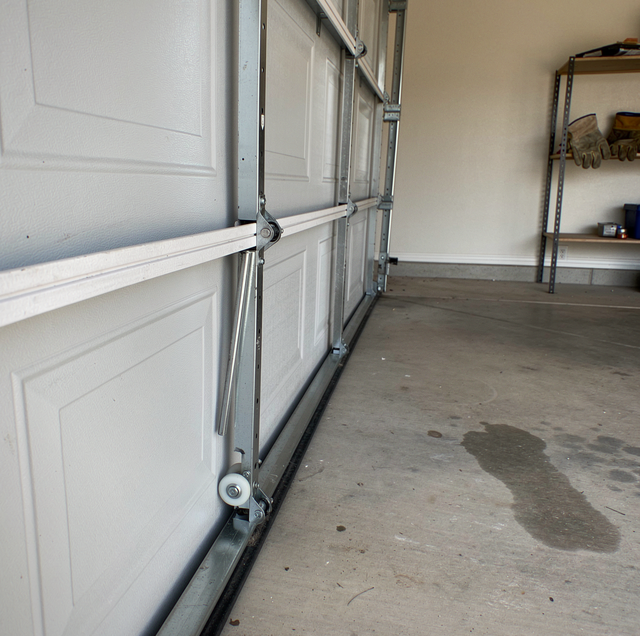
Quick Answer: If a garage door has come off its track, stop trying to open or close it, keep people and pets away from the door and the springs above it, and call a professional. Do not pull, push, or pry the door back into the track, and do not try to fix cables or springs yourself. A door out of its track is being held up by damaged or overloaded hardware, and the safest move is to leave it alone until someone trained to handle spring tension can look at it.
A garage door hanging crooked, stuck partway up, or leaning off to one side with a roller sitting outside the rail where it should be running has come off its track, and it usually happens without warning. The door is heavy; it is connected to springs holding real tension, and something in the system that was supposed to keep it aligned has already failed. What you do in the first few minutes affects whether the situation stays contained or gets worse.
What Causes a Garage Door to Come off Its Track
A door does not usually jump its track for no reason. A few mechanical failures are behind most cases. A roller can wear down, crack, or snap off its stem, letting that corner of the door drop out of the rail it was riding in. A track can bend or pull loose from its mounting brackets, often after years of cycles gradually working the hardware looser, so the rail no longer holds a straight line for the rollers to follow. A cable can fray and slip off its drum, throwing the door out of balance and letting one side sag lower than the other until it binds against the track and pops free. A broken torsion or extension spring removes the counterweight that was holding most of the door's weight, and the sudden shift can pull a panel sideways hard enough to force it off the rail. Less often, something as simple as a box, a bike, or a stray tool left in the door's path gets struck mid-cycle and knocks a section loose.
Any of these can happen with a door that looked and sounded fine the last time it ran. That is part of why an off-track door catches people off guard: the failure is usually due to mechanical wear that reaches a breaking point, not something you could have seen coming.
The First Thing to Do Right Now
Stop trying to move the door. If it is stuck partway, resist the urge to keep pressing the wall button or the remote hoping it will finish the cycle. Running the opener against a door that is no longer riding correctly in its track puts more strain on whatever hardware already failed and can pull the door further out of alignment, damage the opener's motor, or let a section fall.
Clear the area. Keep kids, pets, and anyone else away from the door itself and from the area directly beneath the springs mounted above it. A garage door and the tension holding it can move unexpectedly even while sitting still, so treat the space around it as off-limits until it has been checked out.
Look, but do not touch, the hardware. It is fine to note what you see: a roller out of the rail, a bent section of track, a cable hanging loose, a visible gap where a spring should be intact. That information is useful to share with a technician on the phone. Reaching in to try to straighten a bent track or reseat a roller yourself is not.
What Not to Do When a Door Is off Its Track
Do not try to force the door back onto the track by pushing, pulling, or prying it into place. Do not attempt to cut, loosen, or otherwise release a spring or cable, even if it appears to be already partway detached. Do not run the garage door opener while the door is off its track. Springs, cables, and a heavy door panel under uneven load can move suddenly and cause a serious injury. If you are not certain a step is safe, the safest step is to step back and call a professional instead.
Each of those instincts feels reasonable in the moment. The door looks like it just needs a shove back into the rail, or the drooping cable could be looped back onto the drum by hand. A door off its track is no longer supported as it was designed to be, so what looks like a simple fix can shift the whole panel, release stored spring tension, or drop the door onto anything or anyone underneath it.
Why the Manual Release Is Not the Answer Here
Some homeowners know their opener has a manual release cord, usually a red handle hanging from the trolley, and think pulling it will stop anything from driving the door further off track. It will not help, and on a door that is off-track, stuck partway open, or missing a spring, it can make the situation far more dangerous. The release cord disconnects the door from the trolley, and on a raised door that trolley connection may be the only thing still holding the weight up. Pull it on a door with a weakened or broken spring, and the door can drop at full weight onto anything, or anyone, underneath it. Leave the release cord alone. If the opener's power cord is easily and safely reachable without going near the door, the track, or the springs, then unplugging it at the outlet is enough to ensure nothing tries to drive the door again. If it is not easily reachable, leave that alone too and wait for a technician.
Why This Is a Job for a Professional
A door that has come off its track usually means more than one component needs attention: the track itself may need to be straightened or replaced, a roller may need to be removed, a cable may need to be reseated on its drum, or a spring may need to be replaced entirely. These parts work together under real tension, and putting the door back on its track without correcting whatever failed first often means it comes off again, sometimes worse than before.
A trained technician starts by securing the door safely before anything is adjusted, then works through the track, rollers, cables, and springs to determine what actually failed and what else the failure may have stressed. That inspection step matters because a track that looks fine at a glance can be bent just enough to throw the rollers off again once the door is back in motion, and a spring that looks intact can already be weakened from carrying an uneven load while the cable was off the drum.
What Happens When a Technician Arrives
Expect a walk-through of what happened before any tools come out: when the door last worked normally, what it looked or sounded like right before it came off track, and whether anything struck the door around that time. From there, the technician checks the track alignment, rollers, cables, and spring system to identify what failed and what needs to be repaired or replaced to get the door back on track and holding. Emergency calls get a faster response than routine scheduling, since a door stuck open or badly off-balance is a security and safety issue that should not sit overnight. Once the repair is finished, the technician runs the door through several full cycles to confirm it tracks straight and balances correctly before calling the job done.
Keeping a Door on Its Track Going Forward
Rollers and tracks wear gradually before they fail all at once, so a door that comes off track once is worth a closer look even after the immediate repair is finished. A regular tune-up checks roller condition, track alignment, cable tension, and spring balance before any one of them reaches a breaking point, catching a worn roller or a loosening bracket while it is still a small fix. Keeping the area around the door clear of stored items also removes one of the more avoidable causes of a door striking something mid-cycle and jumping the rail.
Frequently Asked Questions
Yes. A worn roller often gives a faint warning first, a rhythmic squeak or a slight thump each time it passes the same spot on the track, for weeks before it finally cracks or slips off its stem. Nylon rollers commonly start showing that kind of wear somewhere in the 3,000 to 5,000 cycle range, while steel rollers with ball bearings tend to hold up longer before the same signs appear. By the time the door actually jumps the track, that early warning sound has usually been there for a while.
If the car is already parked and the door is not being cycled, it can generally stay where it is until a technician arrives. Set the parking brake, avoid driving in or out through a door that is not tracking correctly, and keep anyone in or near the vehicle away from the space directly under the springs. The one exception is a vehicle parked directly beneath a door that is hanging open or partly open: that space is exactly where a failing door could come down, so do not attempt to move the car out from under it, and mention its location when you call so the technician can plan around it.
Not always. A door can jump its track from a bad roller, a bent rail, or a slipped cable while the spring system is still intact. To confirm the spring is still doing its job, a technician typically runs a manual balance test: with the opener disconnected, the door is raised by hand to about the halfway point and let go. A properly balanced door stays roughly in place, while one that drifts down or shoots up signals a spring that needs adjustment or replacement, whether or not it looks broken at a glance.
It is common for one side to fail first, since a single bad roller, a loose bracket, or a fraying cable on one track typically pulls that corner of the door down before the opposite side is affected. That uneven pull is often what causes the door to bind and pop loose rather than both sides failing at once.
Off-track doors are treated as emergencies because a door stuck open or hanging unevenly is both a security gap and a safety hazard. Same-day or next-day response is standard for this kind of call, with 24/7 availability for situations that cannot wait until regular business hours.
It should be. Forcing an opener to drive a door that is not moving freely in its track can strain the motor, gears, or trolley system, and it can also throw off the safety sensors that detect an obstruction. A technician typically checks the opener's function and sensor alignment, along with the track repair, to confirm that nothing else was affected.
Call for emergency off-track door service — a trained technician will assess the rollers, track, and cables and get the door moving again safely. Lucky Boy Garage Door LLC serves Mesa and the East Valley. ROC #341884. Call (480) 906-4474.
