
Garage Door Manual Release: The Cord That Frees a Stuck Door
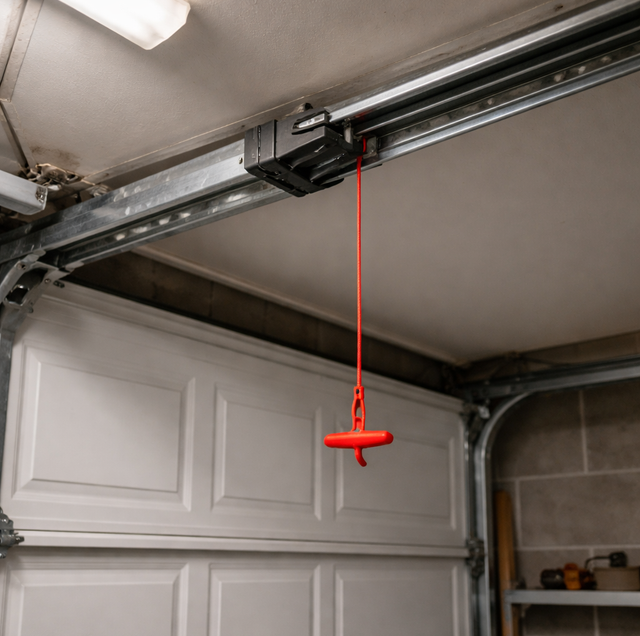
Quick Answer: The manual release is the red cord that disconnects your garage door from the opener's trolley so you can raise and lower the door by hand during a power outage or opener failure. Only pull it when the door is fully DOWN and closed. A raised door with a broken spring can slam down the instant it is released.
The power cuts out during a storm, or the opener motor simply gives up, and the car you need is sitting behind a door that won't move. Almost every automatic garage door has a fix built in for exactly this moment: a red cord hanging from the track near the center of the door. That cord is the manual release, sometimes called the emergency release, and it exists so you are never truly locked in or out because of a dead opener.
Knowing what it does before you yank it matters more than most people expect. Pulled at the wrong moment, on the wrong kind of door, that same cord can turn a stalled morning into a hospital visit. So it helps to understand the mechanism first, then the safe way to use it.
What the Manual Release Actually Disconnects
Your opener does not lift the door. That is the job of the springs, which are wound to counterbalance the door's weight so it feels nearly weightless. The opener's real job is smaller: a motor turns a chain, belt, or screw that drags a small sliding part called the trolley along the rail. An arm connects that trolley to the top of the door, so as the trolley moves, the door follows.
The manual release breaks the link between the trolley and the door arm. When you pull the red cord, a spring-loaded latch on the trolley opens and lets go of the arm. The motor and rail stay exactly where they are; the door is now free to slide up and down on its own rollers, riding on the balance the springs provide. Nothing about the motor changes, and nothing electrical is touched. You have simply unhooked the door from the machine that normally pushes it.
That distinction explains the central safety rule. Because the springs, not the opener, hold the door's weight, releasing a door that is already raised removes the motor's grip while leaving the load entirely on the spring system. If a spring is broken, the opener may have been the only thing holding that door up. Let go of it, and gravity takes over instantly.
When Pulling the Release Makes Sense
There are a handful of situations where the manual release is the right tool.
Power Outage: No electricity means no opener. Pulling the release lets you operate the door by hand until power returns. This is the most common reason homeowners ever touch the cord.
Opener or Motor Failure: A burned-out motor, a stripped drive gear, or a dead control board can leave the opener powered but useless. The release lets you keep using the door while you wait for a repair.
A Jammed or Stuck Opener: Sometimes the trolley binds, the opener stalls partway, or the logic board freezes with the door half-open. Disconnecting the trolley lets you take the door out of the opener's control and move it clear by hand.
A Car Trapped Inside: When a vehicle is stuck behind a door that won't open electrically, the release is how you get it out. It is worth learning where your cord is and how it feels before an emergency, not during one.
In every one of these cases, the safe version of the move starts the same way: with the door down.
The One Rule That Prevents Injuries
Only pull the manual release when the door is fully closed and resting on the floor.
A closed door has nowhere to fall. Its weight is already on the ground, so disconnecting it changes nothing about where it sits. You can then lift it deliberately, at your own pace, with your own hands.
A raised or partly open door is a different animal.
If a spring has failed, or a cable has slipped off its drum, the opener's trolley may be the only thing keeping several hundred pounds suspended overhead. Release that trolley and the door can crash down with enough force to crush whatever is beneath it, including a car hood, a pet, or a person.
This is the single most dangerous mistake people make with the cord, and it is entirely avoidable. If the door is up and you cannot safely bring it down first, leave the cord alone and call for help.
How to Pull the Release and Lift the Door
With the door closed, the process is short.
Step 1: Locate and Pull the Cord: Find the red handle hanging from the trolley on the ceiling rail, usually near the center of the door. Pull it straight down and slightly back toward the opener motor. You will feel and hear the latch pop as the trolley lets go of the door arm.
Step 2: Lift Straight Up: Grip the bottom of the door with both hands, keep your back straight, and lift evenly. A properly balanced door on healthy springs should feel light, roughly the effort of lifting a loaded suitcase, and should stay put wherever you stop it. Raise it fully until it rests in the open track.
Step 3: Lower It Carefully When Needed: To close, bring the door down slowly and in control, keeping your fingers away from the gaps between panels. Never let it drop.
If the door feels dangerously heavy, fights you, or slams back down when you pause, stop immediately. That is a spring or balance problem, and forcing it puts your hands near parts under extreme tension.
Re-Engaging the Trolley Afterward
Getting back to normal automatic operation is just as simple, and on most openers it happens almost by itself.
Option A: Let the Opener Re-Latch: Once power is back, close the door by hand until it is fully down. Then press the wall button or remote. The motor drives the trolley along the rail, and when it reaches the disconnected carriage, the latch snaps back onto the door arm on its own. The next full cycle re-couples everything.
Option B: Re-Engage by Hand: Some models have a second position on the release: pull the cord toward the door (or push the lever back up) to manually reset the latch, then run the opener once to confirm the trolley grabs the arm. Check the small label on your trolley or the opener manual for the exact motion, since brands like LiftMaster, Genie, and Chamberlain differ slightly.
Either way, run the door through one complete open-and-close cycle and watch that it reconnects smoothly before you rely on it again.
A Quick Word on Security
The manual release is a safety feature, but on some door designs it can be a soft spot. On certain doors, a person outside can slip a coat hanger or thin wire over the top of the door, hook the release cord, and pop the trolley loose, opening the door without a remote.
If your garage has windows in the top section, that risk goes up because an intruder can see the cord and aim for it.
A short, simple fix is a small release shield or a zip tie that keeps the cord from being fished from outside without stopping you from using it in a real emergency. Shortening an overly long cord helps too. It is a minor upgrade, but a worthwhile one on an attached garage.
When "Hard to Lift" Means Call a Pro
The manual release tells you something useful every time you use it. A balanced door should feel light and stay wherever you leave it. If lifting the door by hand feels like hauling a barbell, or if it drifts down on its own or shoots up when you let go, the springs are no longer doing their job.
Broken, stretched, or badly adjusted springs are not a repair to attempt yourself. Torsion and extension springs store enormous energy, and the cables and drums around them are under matching tension. A slip can send hardware flying. When the release reveals a heavy or unbalanced door, the safe move is to leave the springs, cables, and drums to a technician with the right winding bars and clamps, and to keep your hands out of the section joints in the meantime.
Frequently Asked Questions
No. The release is purely mechanical and only unhooks the trolley from the door arm. The opener stays powered, and its logic board keeps running. If you want the motor electrically dead while you work, unplug the opener from the ceiling outlet or switch off its breaker, which the cord does not do.
Yes, and it is smart to do so during a long outage. With the opener disengaged, the door has no motor holding it shut, so a manual slide bolt or the door's built-in lock bar keeps it secure. Remember to disengage that lock before you re-power and cycle the opener, or the motor will strain against a bolted door.
A trolley under tension resists releasing. This usually happens when the door is not fully closed, and the arm is still bearing load, which is another reason to only pull it with the door down. Cold-stiffened grease on the rail can also add drag in winter, while a bone-dry rail in hot months lets grit bind the carriage; a light garage-door lubricant on the trolley track frees both.
Test it about once a year as part of a door check. With the door closed, pull the release and lift by hand to confirm the door moves freely and feels balanced, then re-engage and cycle the opener. This yearly test catches a failing spring before it strands you and keeps the latch from seizing up from disuse.
It should not be used then. A door that has jumped its track or lost a cable is no longer riding safely on its rollers, and disconnecting the opener can let it swing, twist, or drop unpredictably. Leave an off-track door where it is, keep people and cars clear, and have a technician re-seat it rather than freeing it with the cord.
Not always. Standard sectional doors use the trolley-and-cord system described here, but some one-piece tilt-up doors and commercial rolling doors use a different disconnect, such as a floor-level chain hoist or a lever near the wall. Check your specific door's hardware, so you know exactly where its release is before an outage forces you to look.
Stuck behind a door that won't budge — get it moving safely with a same-day service call. Lucky Boy Garage Door serves Mesa, Phoenix, and Gilbert. ROC #341884. Call (480) 906-4474.
