
Why Garage Door Springs Snap More Often in Hot Climates
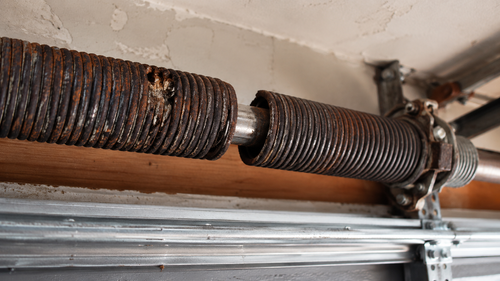
Quick Answer: Garage door springs fail mainly from metal fatigue — they're rated for a set number of open-close cycles, and each cycle stresses the steel until it eventually breaks. A hot desert climate accelerates this: the wide daily temperature swings make the steel expand and contract repeatedly, adding stress on top of normal use, and heat-driven loss of lubrication lets parts wear faster. Many breaks still happen on cool mornings, when contracted metal is most brittle. Maintenance and quality springs extend their life.
A garage door spring snapping seems to come out of nowhere — one day the door just won't lift, and you find a broken coil. But springs don't really fail at random; they wear out along a predictable curve, and the climate they live in affects how quickly they get there. In a hot place like the East Valley, a few factors stack up to shorten spring life, and understanding them helps you see a failure coming instead of being stranded by it.
Why Springs Fail in the First Place
Garage door springs do the heavy lifting — they counterbalance the weight of the door so the opener (and you) can move it easily. They're wound under high tension, and they're rated by cycles: a typical spring is built for a set number of open-and-close cycles before metal fatigue catches up with it. Every cycle flexes the steel a little, and over thousands of cycles, that repeated stress weakens the metal until it finally cracks and snaps. So the baseline cause of a broken spring is simply cumulative wear, and a busy household that opens the door many times a day reaches that limit faster.
How a Hot Climate Speeds It Up
The desert adds stress on top of normal cycling in a few ways:
- Extreme temperature swings. A garage in a hot climate can swing dramatically between a scorching afternoon and a cool night. Metal expands when hot and contracts when cold, and that constant expansion-and-contraction is its own form of stress on a spring already under tension — it's worked harder than a spring in a stable, mild climate.
- Heat and lost lubrication. High heat can dry out the lubricant on the springs and hardware faster, and a dry spring suffers more friction and wear with every cycle. Lubrication is what lets the coils move smoothly; without it, they grind and fatigue sooner.
- Brittleness in the cold snap. Here's the twist people find surprising: even in a hot climate, many springs actually break on the coolest mornings. Steel becomes more brittle as it contracts in the cold, so a spring weakened by months of heat cycling and use often gives out on that first cold morning, when the metal is least forgiving. The heat does the long-term damage; the cold morning is often the final straw.
| Factor | Effect on springs |
|---|---|
| Cycle count (normal use) | Baseline metal fatigue; more use, faster wear |
| Wide day-night temperature swings | Repeated expansion/contraction adds stress |
| Heat drying out lubrication | More friction and faster wear per cycle |
| Cool mornings | Contracted steel is more brittle and prone to snap |
| Rust or poor-quality steel | Weakens the spring faster |
How to Make Springs Last Longer
You can't stop springs from being consumable parts, but you can get more life out of them. The single most valuable habit is lubrication: keeping the springs and hardware properly lubricated (with a product made for garage doors) reduces friction and fatigue, and it matters even more in a hot, dry climate where lubricant breaks down faster. Beyond that, having the door's balance checked matters — an out-of-balance door forces the springs to work harder than they should, accelerating wear. Quality springs, and higher-cycle springs for a busy household, last longer than bargain ones. And periodic professional maintenance catches a spring that's starting to fatigue before it strands you, since a technician can spot gaps forming in the coils, rust, or a door that's drifting out of balance — all early warnings that a spring is on its way out.
A critical safety note: garage door springs are under extreme tension, and adjusting or replacing them is truly dangerous — a spring under load can cause serious injury. Lubrication is a safe homeowner task; spring replacement and tension adjustment are jobs for a trained technician, not a DIY project. If a spring has already broken, don't try to operate the door, and don't attempt the repair yourself.
Frequently Asked Questions
Springs fail from metal fatigue as they cycle, and a hot climate speeds that up. The wide swings between hot days and cool nights make the steel expand and contract repeatedly, adding stress, and high heat dries out the lubrication that reduces wear. Interestingly, many springs still snap on cool mornings, when the contracted, fatigued steel is most brittle. The heat does long-term damage; the cold morning is often the final straw.
Springs are rated by cycles — a set number of open-and-close movements before metal fatigue catches up — so their lifespan depends heavily on how often the door is used. A household that opens the door many times a day wears springs out faster than one that rarely uses it. Climate, lubrication, balance, and spring quality also affect it. Higher-cycle springs last longer for busy homes.
Yes. The most valuable habit is keeping the springs and hardware properly lubricated with a garage-door product, which reduces friction and fatigue — especially important in hot, dry climates where lubricant breaks down faster. Having the door's balance checked also helps, since an unbalanced door overworks the springs. Higher-quality springs and periodic professional maintenance further extend their life.
Because steel becomes more brittle as it contracts in the cold. A spring weakened by months of heat-cycling and normal use is already near its limit, and the first cool morning — when the contracted metal is least forgiving — is often when it finally snaps. So even in a hot climate, the actual break frequently happens in the cold, with the heat having done the underlying damage over time.
No. Garage door springs are under extreme tension, and adjusting or replacing them is truly dangerous — a spring under load can release suddenly and cause serious injury. Lubricating the springs is a safe homeowner task, but replacement and tension adjustment should always be done by a trained technician. If a spring has broken, don't operate the door or attempt the repair yourself; call a pro. It's also wise to replace springs in pairs when one goes — on a two-spring door, if one has reached the end of its cycle life, the other is usually close behind, and replacing both at once saves you a second service call and keeps the door balanced.
See the Failure Coming, Don't Get Stranded
A garage door spring doesn't snap by bad luck — it wears out on a cycle curve that a hot, swing-prone climate speeds along, often giving out on the first cool morning after months of heat have done the damage. You can't make springs permanent, but lubrication, good balance, quality springs, and periodic maintenance extend their life considerably. Leave the spring work to a technician, since the tension is dangerous, and you'll trade surprise breakdowns for a door that keeps working.
Garage door spring worn out or already broken? — Get it replaced safely and the door balanced to extend the next set. Mesa Garage Door Repair serves Mesa and the East Valley. ROC #341884. Call (480) 906-4474.
