
Garage Door Opening Crooked? 6 Reasons One Side Sags
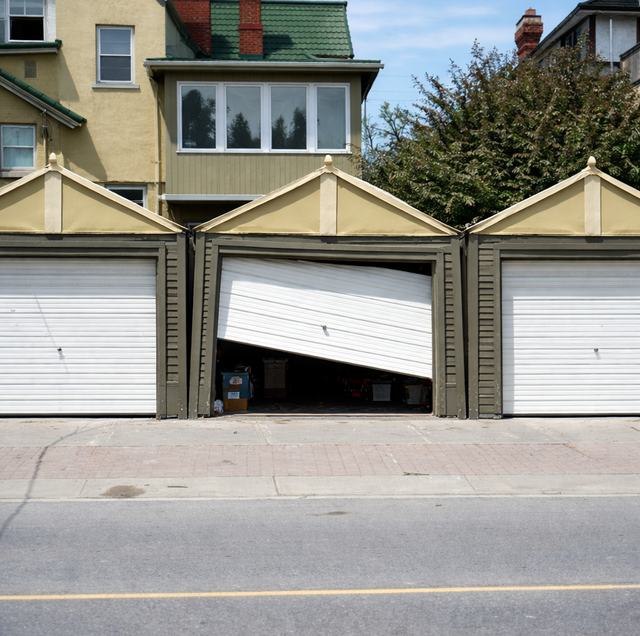
Quick Answer: A crooked or uneven garage door almost always means one side is not lifting at the same rate as the other. The usual causes are a frayed or off-the-drum cable on one side, a bent track or bad roller, a worn cable drum, an obstruction under one corner, a broken spring, or a warped section. Stop using the door and keep hands away from the cables and springs, which are under high tension and are pro-only.
A garage door that lifts crooked, hangs with one corner higher than the other, or looks slanted as it moves is telling you something specific: the two sides are no longer rising together. A door in good shape climbs both vertical tracks at the same rate, so the bottom edge stays level the whole way up. When one side lags, drops, or binds, the door skews. Left alone, a skewed door can jam in the opening, pop a roller out of the track, or, in the worst case, come off its tracks entirely.
Understanding why the balance matters makes the causes below easier to follow.
How A Level Door Is Supposed To Lift
Most residential doors run on a torsion or extension spring system that stores energy to counterbalance the door's weight. On a torsion setup, a steel cable runs down each side from a grooved drum mounted on the spring shaft above the opening. As the door rises, both cables wind onto their drums at the same rate, pulling both bottom corners up together. Rollers guide each side up its own vertical track, and the two tracks curve back along the ceiling in parallel.
For the door to stay level, every part has to match its twin on the other side: equal cable tension, equal drum wear, clean tracks, and rollers that turn freely. Knock any single side out of sync, and the door climbs at an angle. So a crooked door is really a symptom of a left-right mismatch, and the fix is finding which side fell behind.
Six Reasons A Garage Door Goes Up Uneven
A frayed or off-the-drum cable on one side: This is the most common cause. Each lift cable takes enormous strain every cycle, and over years the strands fray, stretch, or slip out of the drum groove. When a cable loses tension or unwinds off its drum, that corner stops getting pulled up. The result is a door that lifts with one bottom corner lagging or dropping while the other climbs normally. You may spot a loose, dangling, or kinked cable on the low side, or hear a slap as it goes slack. A cable that has jumped the drum can also let the door slam if it fully lets go.
A roller off-track or a bent, loose track on one side: Each side rides its own track, and if a roller pops out of the channel or the track itself is bent, dented, or has pulled loose from the wall, that side binds. The door then drags or skews toward the bad side. A stray impact, a loose lag bolt, or a mounting bracket that has worked free will throw the track out of alignment. Because only one side is affected, the door goes up crooked rather than smoothly.
A worn cable drum: The drum is the grooved wheel the cable winds onto. If one drum wears, cracks, or has a set screw that has loosened on the shaft, the cable on that side winds unevenly or slips. That side then takes up less cable per turn, so the corner rises slower and the door tilts. Drum wear is subtle and easy to miss, which is one reason a professional diagnosis matters.
An obstruction under one side: Sometimes the cause is simple: a bag of mulch, a bike tire, a stray tool, or built-up debris and ice sitting under one bottom corner. The door tries to close or open, meets resistance on that side only, and skews or reverses. A safety sensor may catch some of this, but a low obstruction can still tilt the door. This is the one cause a homeowner can usually spot and clear safely.
A broken spring making the opener drag it up unevenly: The springs carry most of the door's weight. When a spring breaks or weakens, the counterbalance is gone, and an automatic opener may still try to haul the door up using only its own motor. Without the spring doing its share, the opener strains and the door can rise slowly, unevenly, or with a pronounced tilt. You might hear a loud bang when a spring snaps, then see a gap in the coil. A door in this state is heavy and unpredictable.
A warped or damaged section: Wood swelling, a dent from a bumper, or a bent panel changes the shape of the door itself. A warped section can catch a track or shift the door's weight to one side, so it no longer sits square in the opening. Even with healthy cables and springs, a distorted panel makes the whole door read as crooked.
Why A Crooked Door Is A Safety Problem
A door that lifts unevenly is not just annoying. As it skews, a roller can ride to the edge of its track and jump out, and once one side leaves the track, the door can bind hard or come down. A garage door is heavy, and a panel that falls or drops does real damage to a car, a person, or a pet underneath. The moment you notice the door going up crooked, stop cycling it. Every extra open and close puts more strain on the already-failing side and raises the odds of an off-track event.
The parts most often behind an uneven lift- the cables, drums, and springs- are the same parts that store dangerous energy.
A wound torsion spring or a tensioned cable that lets go can whip with enough force to break bones. That is why those components are strictly a job for a trained technician with the right winding bars and clamps.
What You Can Safely Check Yourself
There is a small, sensible amount of looking you can do, as long as you keep it to looking.
Do the visual and balance check with the door down: With the door fully closed and the opener unplugged or disconnected from its manual release, stand back and look at both tracks. Scan the bottom of the opening and both lower corners for anything wedged underneath: a stone, a tool, packed debris, a garden bag. Clear any obvious obstruction from the floor and track path. Look for a track that is visibly bent or a bracket hanging loose, and note which side.
Know what to leave alone: Do not touch, pull, adjust, or wind the cables or springs, and do not try to reseat a roller on a door that is under tension. Keep your fingers out of the gaps between sections, where a moving panel can pinch hard. If the door is stuck part-way open, do not stand under it or force it down. Leave it and call for service.
A useful way to think about the balance is a two-person job carrying a long ladder: as long as both people lift at the same height, the ladder stays level, but the moment one lets the end sag, the whole thing tilts and gets hard to control. A garage door works the same way across its two cables, which is why one weak side throws off the entire lift.
When Weather Plays A Part
Temperature swings do affect doors, but not only in one season. In cold spells, steel springs and cables contract and metal gets more brittle, so a spring that was already fatigued is likelier to snap on a frigid morning. In hot, dry stretches, wooden sections can shrink, and metal parts expand, and lubricant thins and runs off, so rollers and hinges bind more easily. Constant daily cycling wears cables and drums year-round regardless of the thermometer. So while a cold snap or a hot afternoon can be the final trigger, the underlying wear builds up in every month of the year, and the fix is the same whenever the door starts lifting crooked.
Frequently Asked Questions
With the door down and the opener disconnected, a broken spring usually shows a visible gap in the coil above the door and makes the door feel extremely heavy to lift by hand. A cable issue more often shows a loose, dangling, or frayed wire down one side while the springs still look intact. Both are high-tension repairs, so confirming which it is safely means leaving your hands off and letting a technician inspect it.
No. Running the opener on a crooked door forces the motor to fight the imbalance and can pull a roller off the track mid-cycle. Openers also have a rated pull limit, and dragging a door with a broken spring can strip the opener gear or trip its overload. Disconnect the opener using the red manual-release cord and leave the door down until it is repaired.
Not directly, but a misaligned photo-eye sensor can make a door reverse partway or refuse to close fully, which can look like uneven travel. The sensors sit a few inches off the floor on each side of the opening. If one is knocked out of alignment or its lens is dirty, the door may stop or reverse. That is separate from a true left-right lift imbalance, though, which comes from the cables, tracks, drums, or springs.
Gravity and spring tension load the door differently in each direction. On the way down, a slightly worn drum or a cable with uneven tension can pay out at different rates, so a fault that stays hidden during the lift shows up on the descent. It points to a developing cable or drum problem that is worth having checked before it worsens in both directions.
A minor kink in a vertical track can sometimes be reshaped by a technician, but a track that is creased, badly dented, or twisted is usually replaced, because a reshaped track rarely holds a true line and the roller will keep binding. The horizontal and curved sections that mount to the ceiling are more often replaced than repaired, since alignment there is critical to smooth travel.
A yearly professional tune-up is the common recommendation, and it typically includes checking cable condition, drum set screws, spring balance, and roller wear before any one part fails. Between visits, watch for early warning signs: a fraying strand on a cable, a faint grinding on one side, or the door starting to hang a hair off-level. Catching a worn cable early is far easier and safer than dealing with an off-track door later.
Noticed one corner sagging or lagging? Have it looked at before it jumps the track and jams. Lucky Boy Garage Door serves Mesa, Phoenix, and Gilbert. ROC #341884. Call (480) 906-4474.
